Set Up to Run Your Gear Through the Night
For most setups, one thing does most of the draining overnight — the fridge, cycling on and off to hold temperature. Run a fan or a CPAP and that can match it. Work out that number once, check where you stand before dark, and the night takes care of itself.
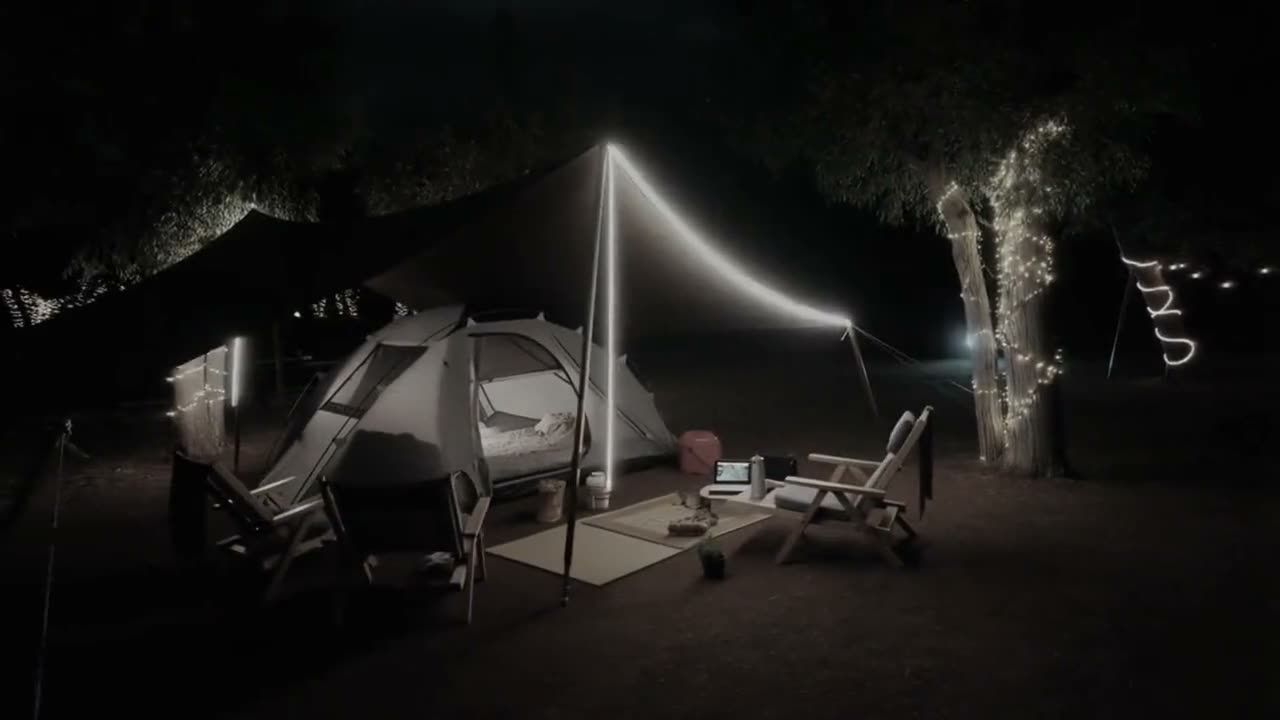
What a night actually costs you
Twelve hours of dark, typical 12V camp setup:
| What's running | Overnight | Notes |
|---|---|---|
| 12V fridge, 40–60L | 15–25 Ah | Less than daytime — it's cooler, and the lid stays shut |
| Lights, an evening's worth | 3–5 Ah | |
| Phones charging | 2–5 Ah | |
| Fan, running all night | 10–20 Ah | Warm climates — often as much as the fridge |
| CPAP | 15–25 Ah | A heated humidifier can double it or more |
| Inverter left switched on | 5–10 Ah | With nothing plugged in. Pure waste. |
Fridge, lights and phones come to about 20–35 Ah a night. Add a fan or a CPAP and you're at 30–60.
That's for a twelve-hour night. In winter, and the further you are from the equator, nights run longer — around 15 hours at 40° in midwinter, and much longer again in the far north. Scale the fridge line to your night.
What you've actually got to spend
Here's the part that catches people: a 100 Ah battery does not give you 100 Ah. How much you can safely take out depends entirely on the chemistry.
| Battery type | Usable from 100 Ah | Why |
|---|---|---|
| Lithium (LiFePO4) | ~80 Ah | Happy to run down to about 20% without damage |
| AGM | ~50 Ah | Going below half shortens its life sharply |
| Flooded lead-acid | ~50 Ah | Same limit, and it likes a full recharge |
So a 35 Ah night against a 100 Ah lithium is comfortable — you're using a bit under half of the ~80 Ah available, with another night in hand if the sun doesn't show. The same night against a 100 Ah AGM uses most of your usable capacity, and a second cloudy day starts to bite.
This is why lithium feels like more battery than it is. A 100 Ah lithium and a 200 Ah AGM give you roughly the same usable power. If you're comparing prices, compare usable amp-hours — not the number on the label.
Once you know your overnight number, the other half of the problem is putting it back each day. That's a panel-sizing question — what size solar you actually need works it through, and the Quick Solar Sizer will ballpark both the panel and the battery for where you're headed in about ten seconds.
Know before dark, not at 2am
A smooth night rarely comes down to the gear. It comes down to knowing where you stand while you can still do something about it.
Glance at your charge in the evening, weigh it against the night ahead, and you either kick back or ease off a load — turn the inverter off, set the fridge a degree warmer, skip the fan for an hour. The alternative finds you in the dark, with a warm fridge by morning or a CPAP gone quiet in the small hours.
The best fix for a tight night, though, happens in daylight: getting more into the battery while the sun's up beats rationing after dark.
Let the app do the sum
Working it out by hand once is worth doing — you learn your own numbers. Doing it every evening, against a battery that's been charging all day at a rate that depends on the weather, is exactly the arithmetic nobody keeps up.
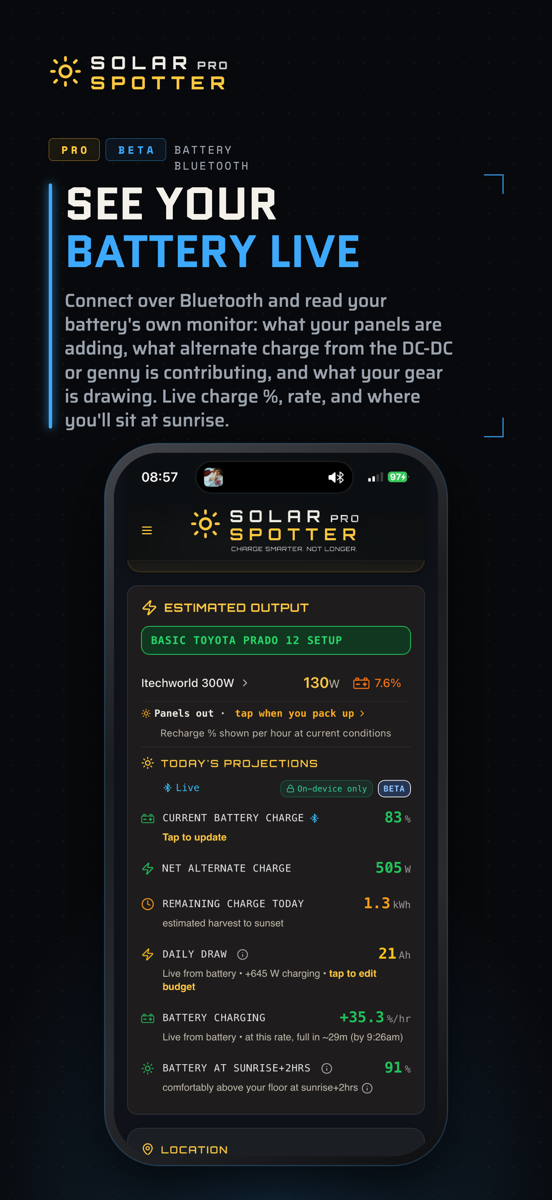
With Pro, the Daily Battery Tracker takes where your battery is now and projects it forward — through the rest of today's charging and on through the night — so you can see before dark whether you'll cruise to sunrise or want to dial something back. Change your daily draw and the projection moves with it. If Bluetooth is measuring your draw, it's averaged over up to a week, so switching something off tonight shows up slowly.
Two things to know when you use it. The app asks for your daily draw — a full 24 hours, day and night, not just the overnight figure above; with Bluetooth it measures this for you. And its overnight verdict is Battery at sunrise+2hrs, not sunrise itself — the first hour or two after the sun comes up is nearly worthless for charging, so that's the real bottom of the night.
Why that beats doing it on paper:
- It works at dusk, in the bush, with no reception. This is the one check you'll want at exactly the moment you have no signal — and it runs on the phone, so it doesn't care. A spreadsheet on a website is no use at a river camp.
- It works from today's sky. Your charge depends on the weather, your angle and the season. The projection uses today's forecast for your spot rather than assuming a good day, so the verdict changes when the day does. With Bluetooth, it reads what actually went in.
- It can read your battery directly. With Pro, Battery Bluetooth (in beta) pulls the state of charge off the battery's own management system instead of you typing in a percentage. It's built for batteries using a JBD monitor, or a JK monitor on version 11 or later — confirmed on iTechworld, with KickAss, LiTime, Power Queen and others on the same chip being verified as reports come in. That's the difference between a projection built on a guess and one built on a measurement. If yours won't pair, "Report a Bluetooth issue" in the app puts the exact diagnostics into an email for you to send us — and telling us your setup at solarspotter.app/bt is how batteries get added to that list.
Any latitude, either hemisphere, any season. Your data stays on your phone — no account, no tracking — and it's a one-off purchase, not a subscription.
Common questions
Will my battery last overnight?
Work it out: a fridge pulls 15–25 Ah over a twelve-hour night, lights and phones another 5–10. Call it 20–35 Ah for a typical setup — more on a long winter night. Against a 100 Ah lithium (about 80 Ah usable) that's comfortable. Against a 100 Ah AGM (about 50 Ah usable) it works, but you've used most of your margin and a cloudy second day will hurt.
How big a battery do I need to run a fridge overnight?
For the fridge alone, 15–25 Ah a night means even a 50 Ah lithium covers it. In practice you want headroom for the rest of your gear and for a day or two of poor sun, so 100 Ah lithium or 200 Ah AGM is the common sweet spot for a fridge-plus-lights setup. Size to your real overnight draw with two cloudy days in mind, not one perfect night — the Quick Solar Sizer will ballpark it for where you're going.
What drains a battery overnight off-grid?
Mostly the fridge, cycling on and off through the night and working harder on a warm one. After that it's whatever you left switched on. An inverter idling with nothing plugged in costs 5–10 Ah a night — as much as your lights and phones combined, for nothing at all. Fans are the other big one in warm weather, often matching the fridge.
How do I know if I'll make it to morning?
Compare tonight's draw against your usable capacity, not your battery's label. If you're at 60% on a 100 Ah lithium, you've got about 40 Ah above the 20% floor against a 30 Ah night — fine. At 60% on a 100 Ah AGM you've got roughly 10 Ah of safe margin, which isn't. Checking in the evening leaves time to do something; checking at 2am doesn't.
Know you'll make it to morning
Solar Spotter shows where to position your panels for your exact spot and today's conditions. Free to download — Pro projects your battery through the night, so you know before dark whether you'll make it to morning.